
London is said to be one of the most walkable cities in the world. And to put this claim to the test, I laced up my walking shoes for the Public Sector Challenge London Bridges Walk. Spanning West to East, the route gives a fresh perspective on all that this amazing city has to offer.

What is the Public Sector Challenge walk route?
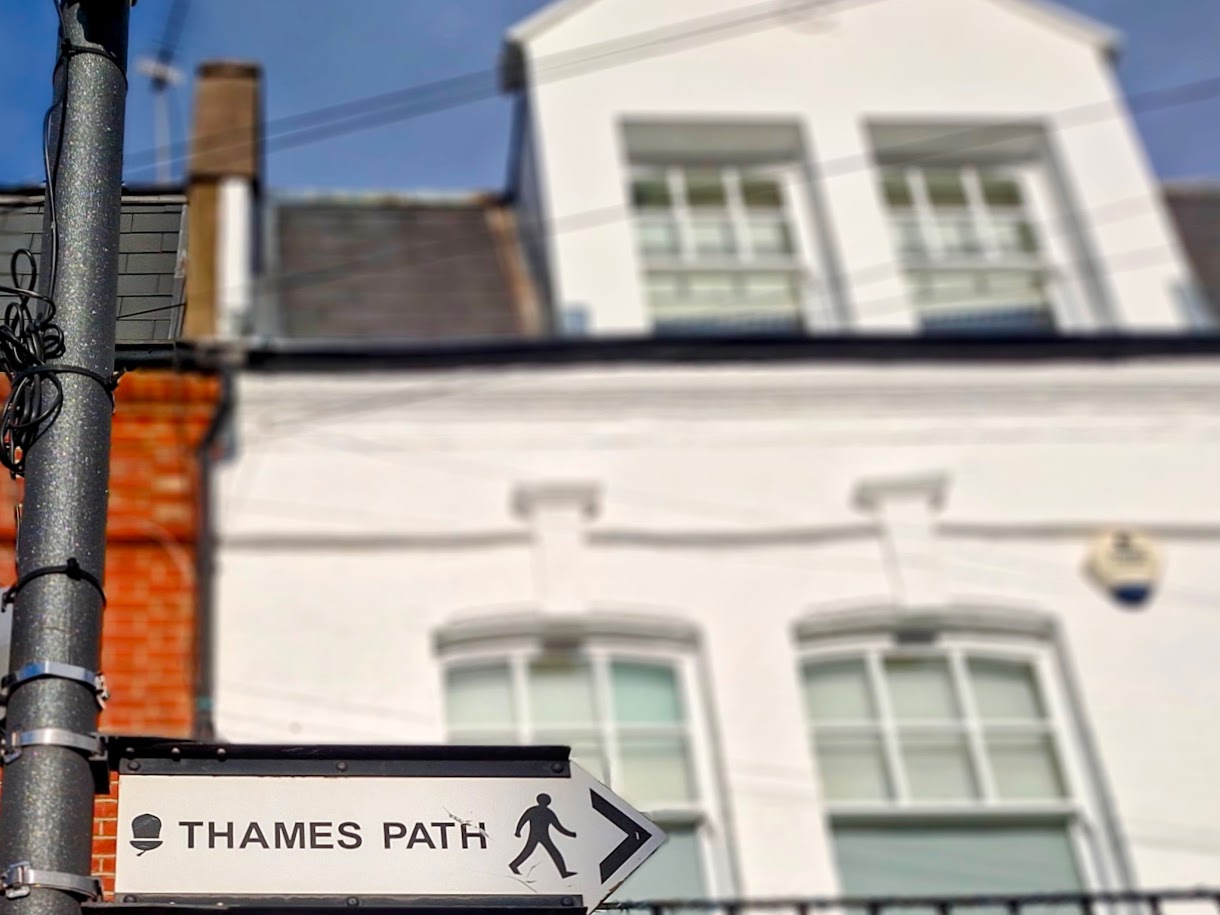
The walk is split into two sections. You can either start in Furnivall Gardens, Hammersmith and walk 25kms to St Catherine’s Dock. Or you can join the walk at Battersea Park and walk the last 15k to the same finish point. Zig-zagging sixteen bridges, the walk takes in some of the most iconic views of London’s landmarks. Feeling reckless, I opted to do the full 25kms.
Who participates in the Public Sector Challenge London Bridges Walk?
As the name suggests, the walk is aimed at public sector workers. For example, I met walkers from the NHS, the London Fire Brigade and local authorities from as far away as Leicester. However, not to be outdone, private sector recruitment firms and consultants were also walking. In total, 1000 walkers took part this year accompanied by children and canine companions.
How did the Public Sector Challenge walk come about?
The walk is the brainchild of Jonathan Stephenson, CEO of Brentwood and Rochford combined authorities. His aim is to unite public sector workers and partners to raise funds for a variety of charities. Furthermore, the walk also aims to boost physical and mental health during one of the toughest months of the year.
What level of fitness is required to do the walk?
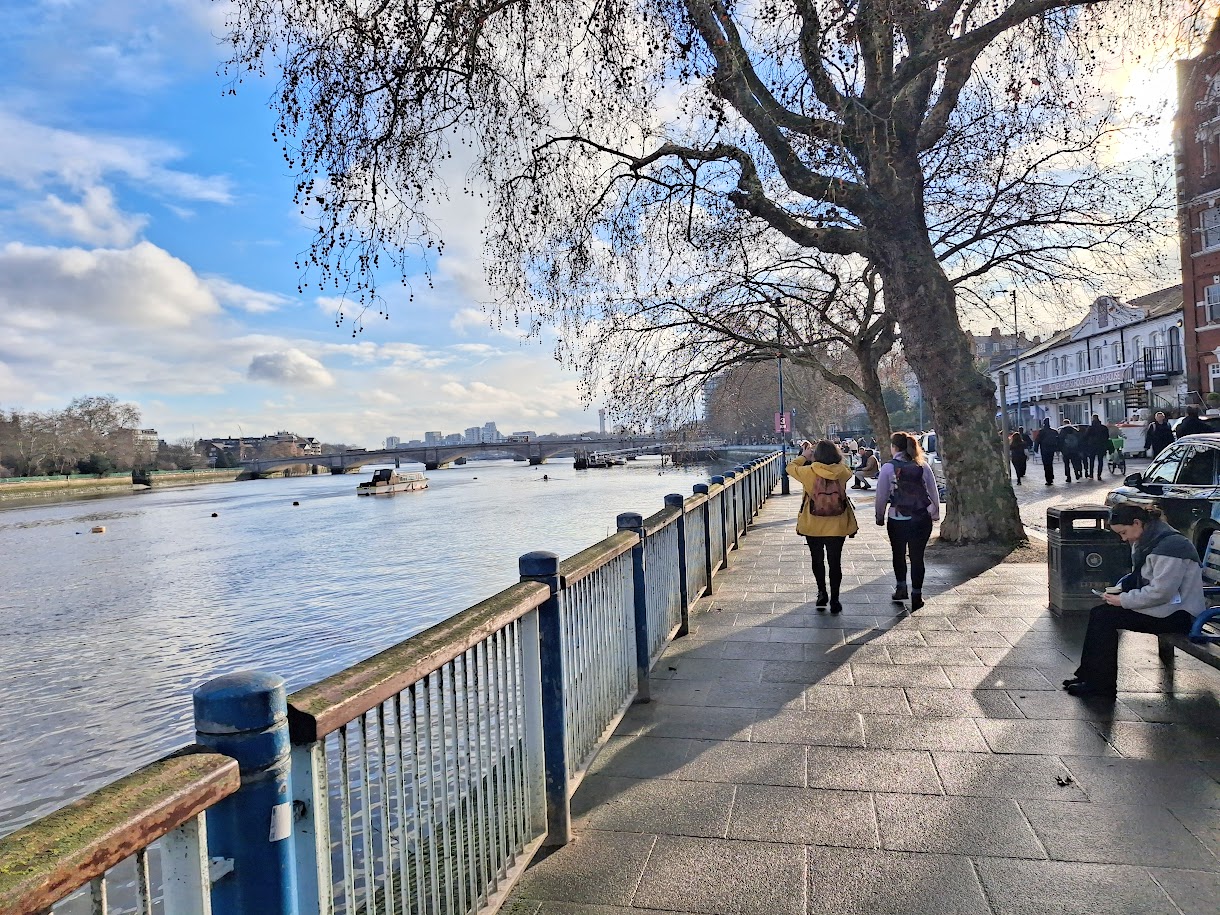
The walk is aimed at all levels of fitness. And the organisers stress that you can do as much or as little as you like. Furthermore, the riverside walk is flat with only occasional steps leading up to a bridge. However as you’re walking on concrete, spare a brief spell of mud at the start, supportive walking shoes are essential.
Unlike Parkrun, the event is not competitive and everyone walks at their own pace. With so many iconic photo opportunities, you can stop frequently for a breather. As an experienced walker, I completed the walk in five hours but everyone goes at their own pace.
Do you need good navigations skills for the walk?
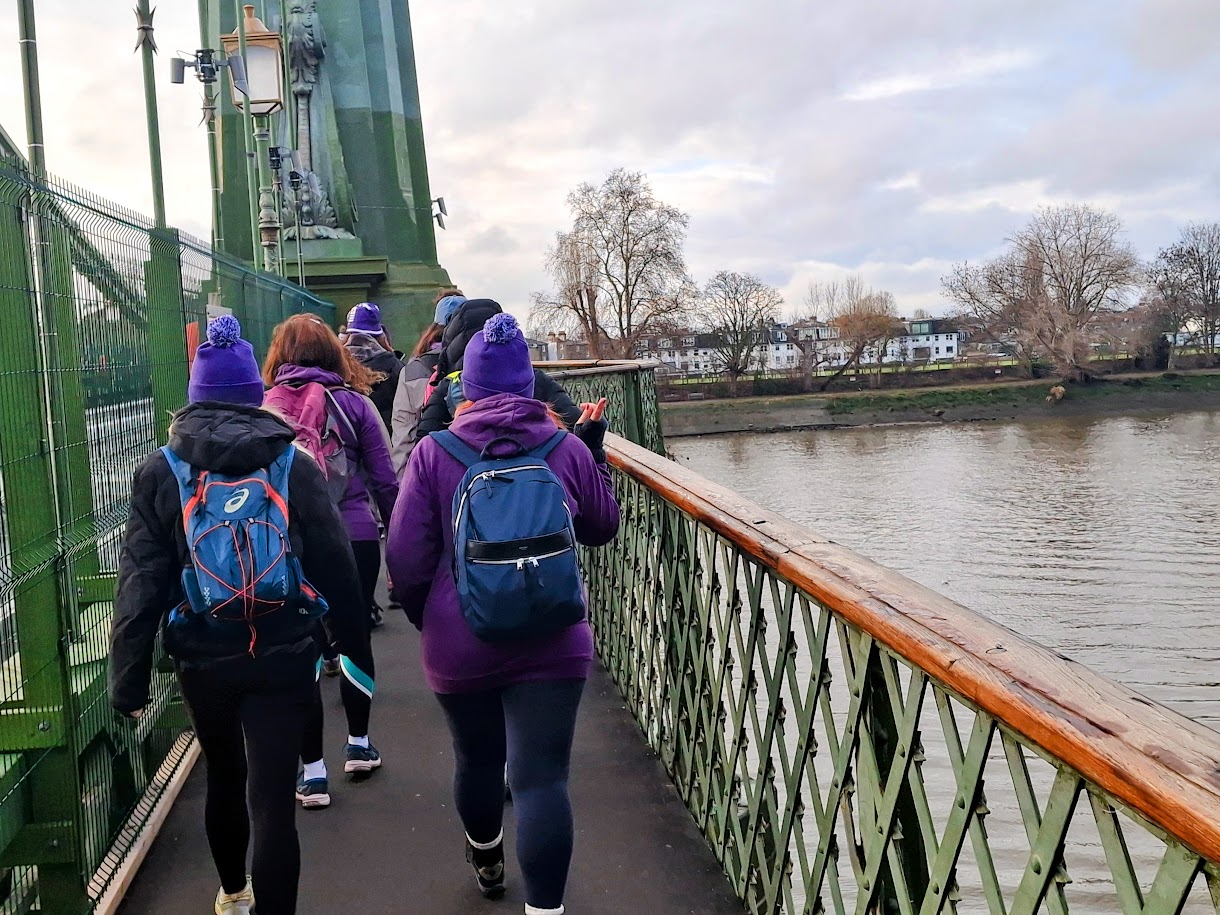
As someone with the worst sense of direction, I managed the walk no problem. There’s a handy map on the walk website which you can download to your phone. But the handiest marker was the purple bobble hats ahead of me. When in doubt, there will always be a bobble hat on the horizon somewhere!
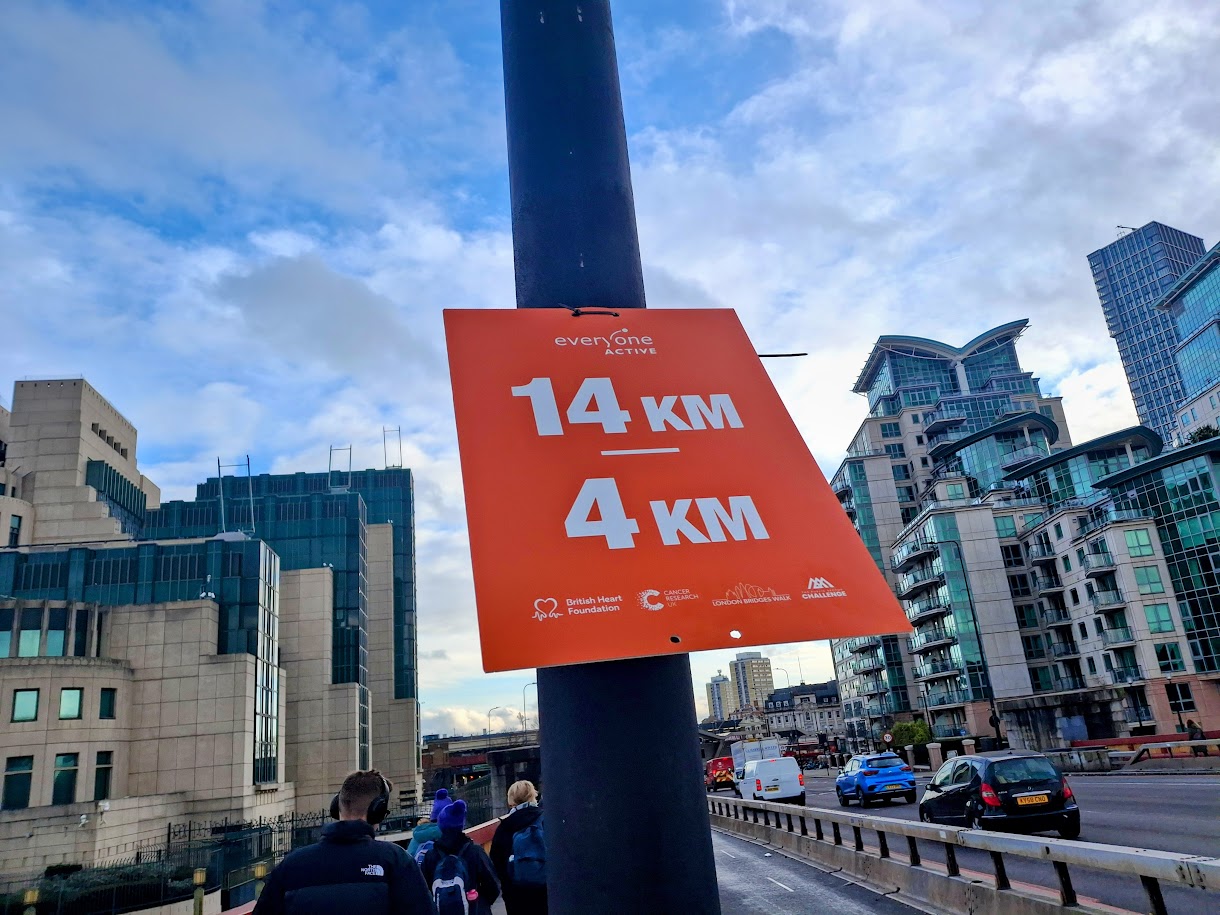
Also watch out for the orange signs telling you how many kilometres you’ve walked. While a bit soul-destroying at the start, they really boost the spirits from the half way point.
Hammersmith to Battersea Bridge
The route shows London’s diversity in all its glory. Hammersmith feels like Henley as sculling boats sweep past in an elegant procession. Here, iconic sights include the former Harrods furniture warehouse. This Grade II listed former furniture depository is now home to 250 homes in “Harrods village”. As you’d expect, prices are astronomical with a five-bed penthouse setting you back £8.5 million.
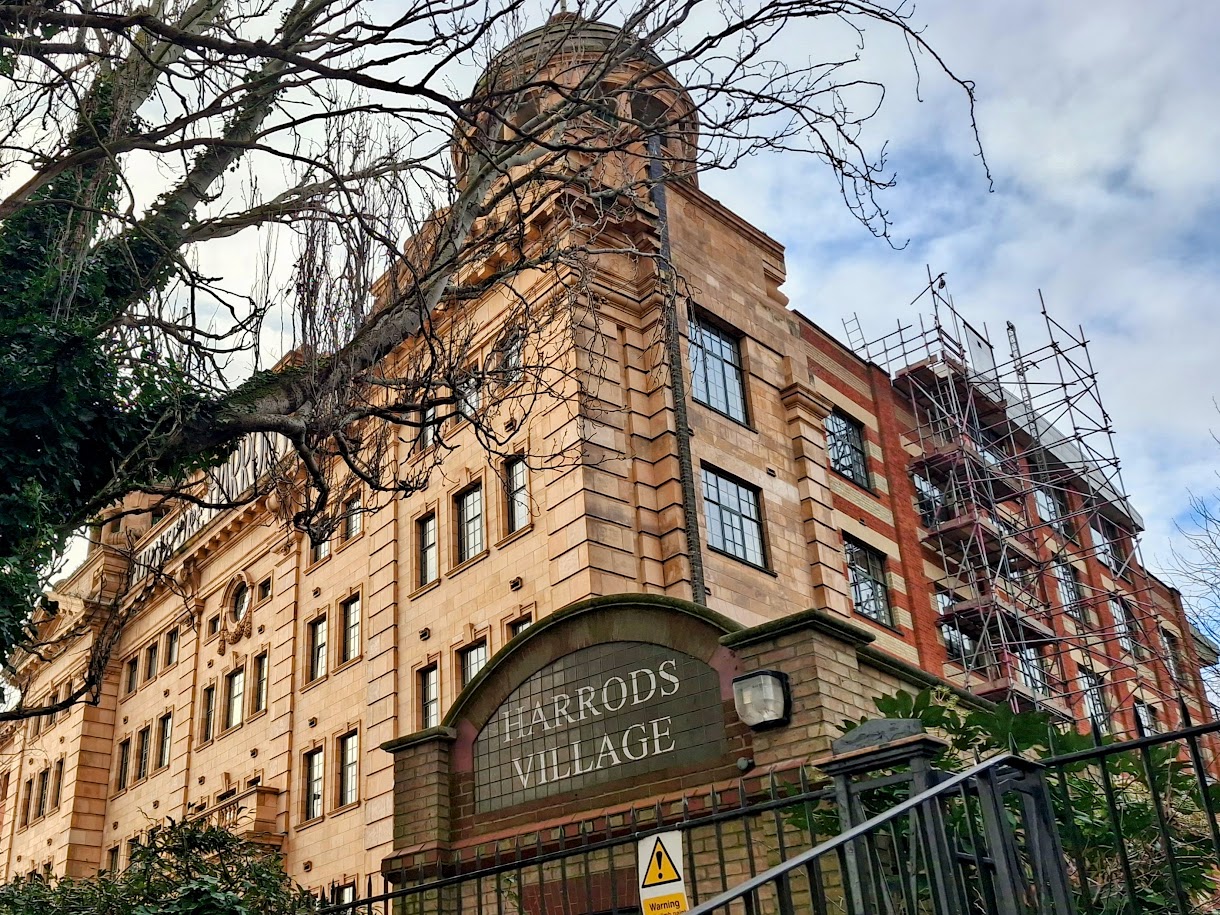
Definitely not for public sector workers. Meanwhile, on the opposite side, the newly developed Fulham Pier swings into view. Home to the famous Craven Cottage football stadium, the Pier offers a dazzling array of coffee shops, eateries and even a riverside market to enjoy on non-match days.
Hurlingham Books
One of the most interesting discoveries early on is Hurlingham Books – reputedly South-West London’s oldest second-hand bookshop. Its shop and adjacent warehouse is crammed to the rafters with more than one million books.

Once past leafy Fulham, the walk becomes increasingly urban. Here, high-rise blocks predominate until you reach Battersea bridge and enter the sanctuary of the park. It’s at this point that the 15k walkers join the throng and it’s the perfect pit stop for an impromptu lunch break. After you get past the park, the newly renovated Battersea Park power station swings into view. Yet another famous London landmark given the Midas touch in a city that never stops changing .
Battersea Park to Westminster
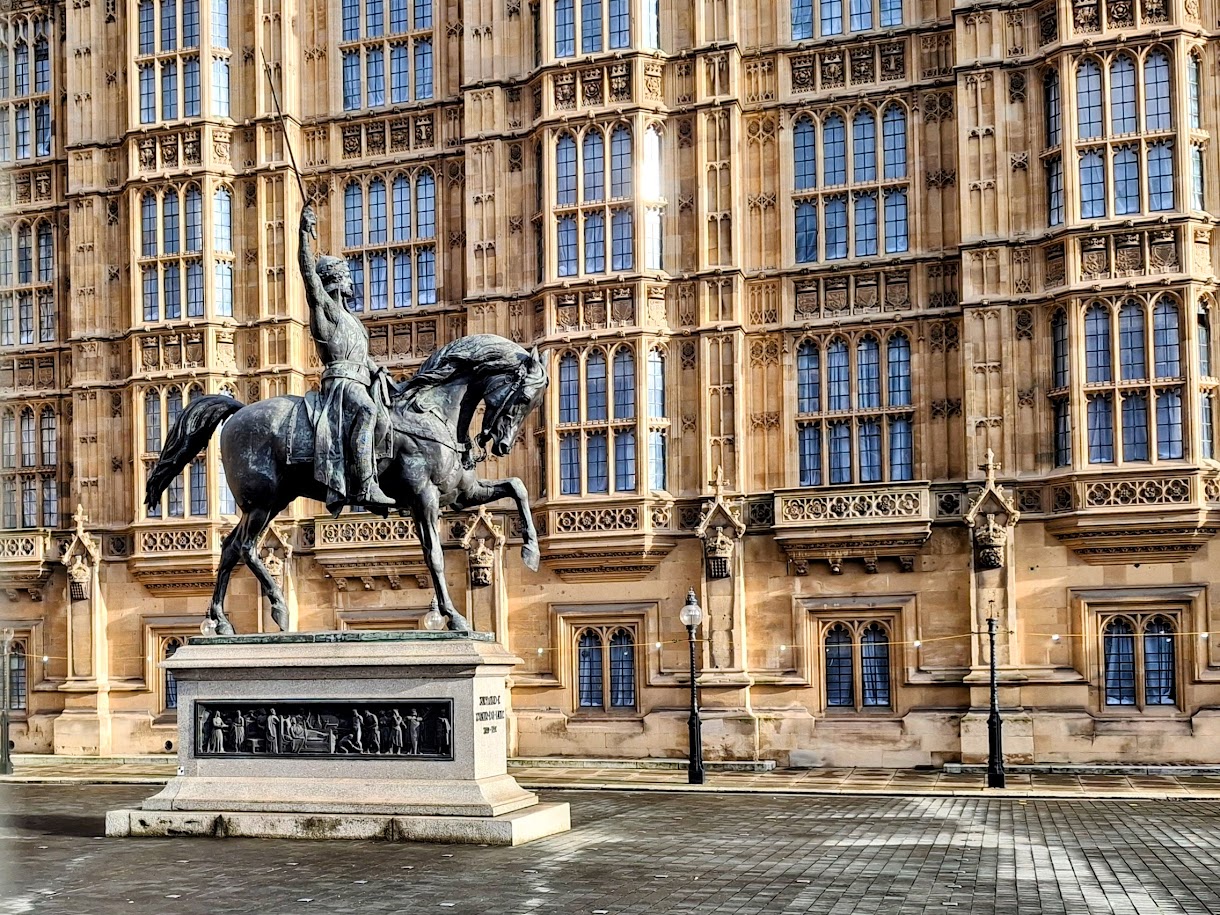
After Battersea Park, the route becomes a concrete jungle veering from the river to streets with heavy traffic. This is the least interesting part but fortunately it’s not long before the hallowed halls of the Houses of Parliament appear. Suddenly sucked into throngs of tourists, you jostle past the Aquarium and the London Eye and onto Hungerford Bridge.
Westminster to City of London
The dragons of the City of London herald another world. The famous “wobbly” Millennium Bridge gives the most iconic view onto St Paul’s Cathedral.
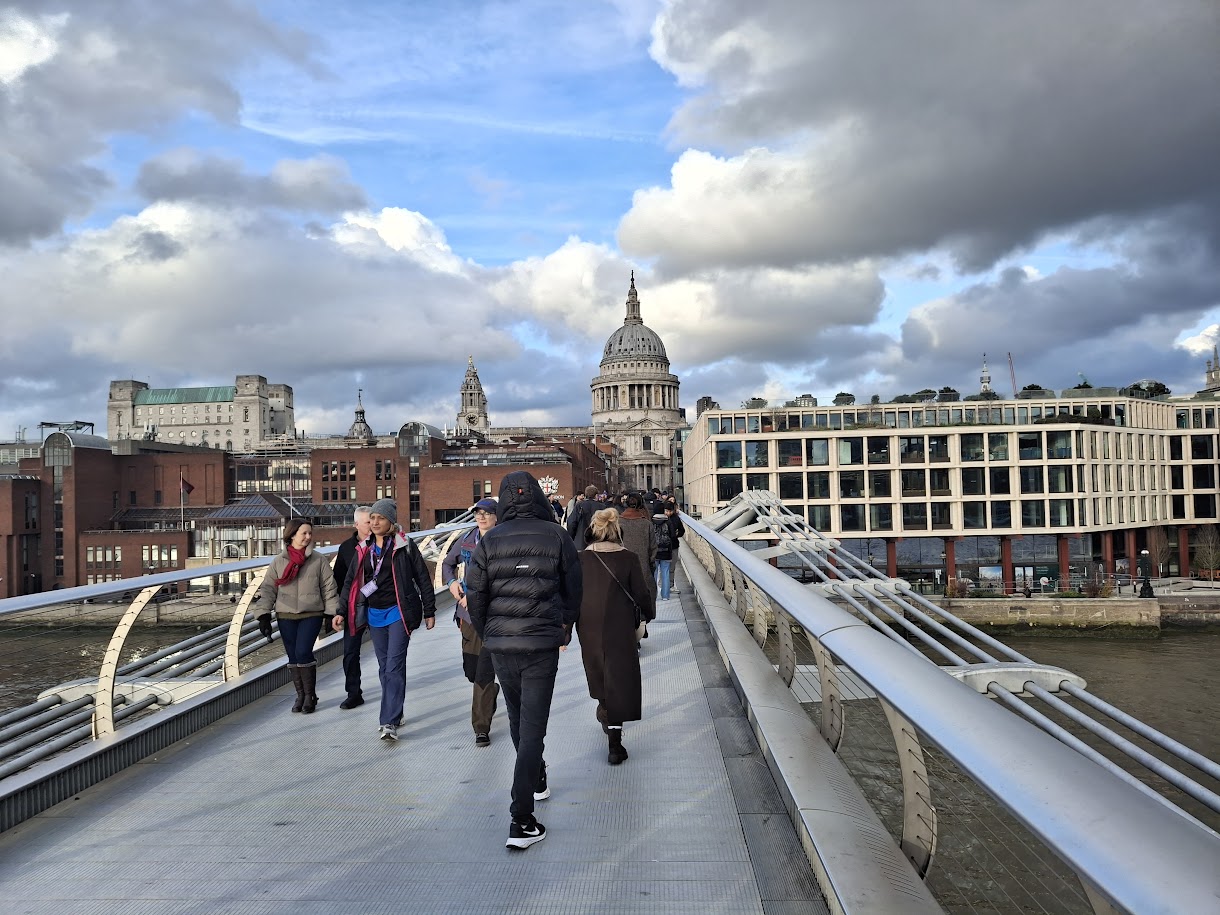
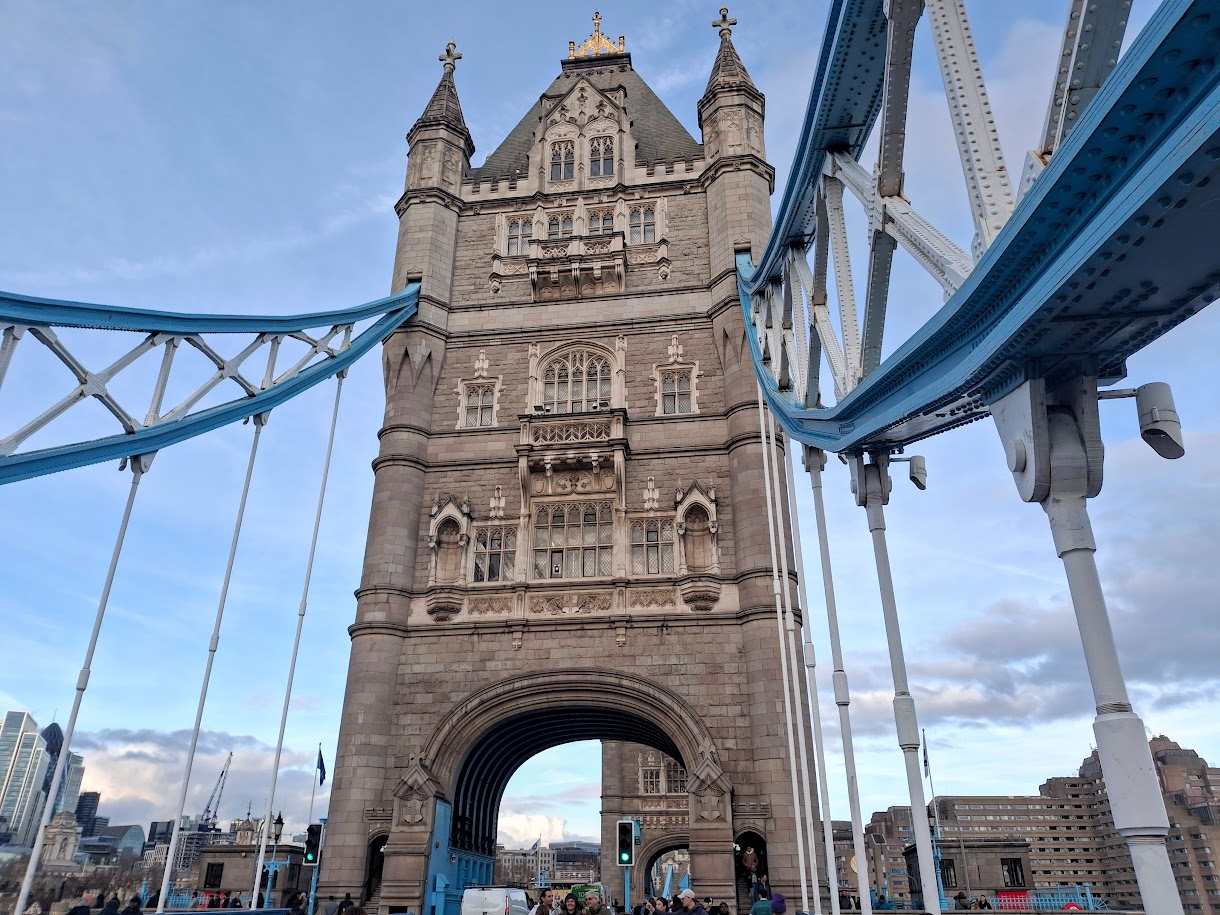
And on our descent, the riverside pathways becomes narrower revealing hidden passageways and old warehouses. I encounter some of my old work haunts including the infamous Banker pub. Crossing Tower Bridge is a moment of triumph as the skyscrapers move ever closer. The last stretch takes you onto St Catherine’s Dock which suddenly appears like a mini Marbella right in the heart of the City. The tranquil marina provides a fitting end to a gruelling day of walking.
The end of the walk
The walk ends at the Dickens Inn in St Catherine’s Dock. The three-storey, 18th century timber warehouse was renamed in honour of Charles Dickens by his great grandson. It’s a fitting end to a walk filled with so much history.
Athletics legend, Colin Jackson, was there to greet us with our medals before we trudged inside for a well-earned complimentary cuppa. It was a fantastic day’s walk and as a seasoned Londoner, it gave me the chance to see the capital with fresh eyes. Would I do it again? I’m signing up now for next year.